Thursday, September 24, 2009
The Role & Measures of Nutrients in Plant Growth
http://www.buzzle.com/articles/the-role--measures-of-nutrients-in-plant-growth.html
The Role & Measures of Nutrients in Plant Growth
Environment plays a very important role in plant growth upto a point. Once optimal environmental levels have been achieved in the hydroponics grow room, however, it is the quality of nutrition that determines crop quality and output. The following background information will be useful in understanding of the role of nutrients in hydroponics cultivation.
Nitrogen
Plants absorb nitrogen from fertilizers in both Nitrate (NO3) and ammonium (NH4) forms. Both ammonium and nitrate forms are available in the standard fertilizer mix supplied. It should be noted however, that ammonium levels should be significantly lower than nitrate levels with a safe level being 10 to 20 times nitrogen available in the Nitrate form vis-à-vis the Ammonium form. Ammonium is readily available to plants and can build up to toxic levels in plant tissue if it is not assimilated for growth. Besides, the Nitrogen from Ammonium is difficult to leach away once it is in plant tissue. It is therefore important too ensure that ammonium content in the nutrients is carefully regulated.
Thursday, September 3, 2009
"Smart" fertilizer improves plant growth, prevents pollution from run off [EXT]
From Penn State
University Park, Pa. -- A new "smart" phosphorus fertilizer, developed by Penn State horticultural scientists, improves plant root growth, drought tolerance, shoot quality and flowers while also preventing up to 90 percent of the nutrient run off that can foul waterways. The new fertilizer is currently undergoing its first Pennsylvania field trials with the aid of a grant from the Commonwealth's Department of Agriculture. However, field trials in Florida have been ongoing since 1998 and have shown high performance of ornamentals grown in sandy soils prone to leaching.
Tuesday, June 2, 2009
Spring and Fall Rose Tonic
by By Mark Whitelaw, Kindly Provided by Laura Whitelaw
Here's a copy of my Spring and Fall Rose Tonic. It is a modification of a recipe passed to me by a very wise and 83-years young rosarian. It assumes your soil pH ranges from 6.5 to 7.5, clay-based and/or rich in calcium.8 parts alfalfa meal
2 parts cottonseed meal (arsenic-free)
2 parts rock phosphate (or colloidal phosphate; but not super phosphate)
2 parts bone meal
1 part blood meal
1 part Epsom salts (magnesium sulfate)
Thoroughly combine ingredients and apply 1 cup (.24 l) of mixture for each foot (30 cm) of shrub height. Lightly scratch the mixture into the soil using caution not to harm the roots. Water-in thoroughly.
This mixture is good in the spring and the fall, and can be applied as a 'tonic' to all blooming perennials, roses, azaleas and fruit-producing trees and plants.
- If soil pH is above 7.5 (and it shouldn't be), reduce the Epsom salts by half to reduce the possibility of applying too much magnesium.
- For new plantings, add 1 part Greensand (0-1-5) to the Fall Tonic
- The NPK of the constituents varies by manufacturer; however, on average these proportions will create a 50-110-20 (or approx. 2-4-1 NPK ratio) slow-release, environment-safe fertilizer. It will not "burn" the foliage or contaminate the soil.
- Blood and bone meals may attract dogs and cats. If this is a problem, repel with pepper spray around the watering well.
- Feather meal may be substituted for alfalfa meal, but the quantities should be cut in half. Feather meal is also quicker to decompose and will not provide sustained nitrogen release beyond about 21 days. Furthermore, alfalfa has micronutrients not found in feather meal.
- Alfalfa meal is quite dusty; a dust mask should be worn when mixing the ingredients.
I apply this tonic immediately after spring and fall pruning (here, late Feb and late Aug). It is so effective, supplemental fertilizations are not required but once-a-month in the spring - until I let the roses rest during summer's heat. For supplemental fertilizations, I use a blend of fish emulsion, kelp liquid concentrate, and un-sulfured molasses @ 2 Tbsp, 1 Tbsp, and 1 Tbsp (30ml, 15ml, 15ml) respectively per gallon of water and pour this around the watering well of each rose.
It is best, if you have a lot of roses, to purchase the ingredients in bulk from the farm/ranch or feed store vis-à-vis the nursery or mailorder. For example, alfalfa meal at the feed store costs about $8 for 40 lbs. At the nursery, it costs $7 for 4 lbs. - and it's the same stuff, just packaged with a prettier label. Use caution when purchasing from a feed store, however, to ensure the alfalfa does not contain salt, as this will be detrimental to your soil. (Try a taste test.)
And if you grow roses in pots or sell them commercially, sprinkle 1 or 2 cups of mixture around the top of the pot. When you water the plants, the fertilizer acts like a timed-release mixture that can cost much, much more.
It should also be noted that some rosarians who live in cold climates report they have reduced aphid and thrips infestations if they withhold fertilizing until after first flush in the spring, thus letting the rose generate growth and blooms from the stored energy in the roots (e.g., like bulb perennials). This would not work for us who live in warmer climates because first flush may not end until May or June, when our temperatures quite regularly get above 95°F(35°C) and our roses like to rest during summer's heat.
I hope that helps a little. But remember, this is what works for me and my garden. (By Mark Whitelaw, Kindly Provided by Laura Whitelaw)
***
Wednesday, May 27, 2009
Therapeutic Benefits of Roses [EXT]
It explains the therapeutic benefits of roses.
by Andrea Grant
Therapeutic Benefits of Roses
Aside from providing an aesthetic appeal, which contributes to the overall pleasure and feeling of well being, roses have a genuine practical use in our regimens of good health. Rose oil and rose water are derived from the flowers and rose hips have many valuable properties.
It is suspected that the rose was probably the very first flower from which rose oil and rose water were distilled; possibly in the 10th Century Persia. Today, most of the rose oils are still produced in that region of the world. A very large quantity of rose petals is needed to produce a very small quantity of oil. Thus, it is very costly. Thankfully only a small amount of rose oil is needed in therapeutic preparations. It is not used in its concentrated state, but rather in a carrier oil such as almond, jojoba, and grapeseed.
Generally rose oil and rose water (a by-product of distillation) are used topically rather than internally; with the exception of aromatherapy.In this case the rose essence may be inhaled, via steam or diffusion. Three varieties of rose are used in commercial production of rose oil and rose water: Rosa Centifolia, Rosa Damascena and Rosa Gallica. The product will vary slightly in colour between these species but the therapeutic benefits are the same.
The use of the rose is far and varied. It has a long history in its use in folk remedies, especially in the area of skincare. It is suitable for all skin types, but it is especially valuable for dry, sensitive or aging skins. It has a tonic and astringent effect on the capillaries just below the skin surface, which makes it useful in diminishing the redness caused by enlarged capillaries. It is important to ensure that the product contains the genuine natural rose oil. Many manufacturers label their products containing rose essence but it could be synthetic. Synthetic rose ingredients have no therapeutic value at all! Remember, with authentic rose oil, a little goes a long way.Certainly rosewater is a less expensive way to provide skincare. It is very soothing to irritated skin.It is also a tonic and antiseptic. Rosewater has been shown to be very valuable as an antiseptic in eye infections.
The rose also offers a soothing property to the nerves and emotional /psychological state of mind. It is regarded as a mild sedative and anti-depressant. It is increasingly used in treatments for conditions of stress: nervous tension, peptic ulcers, heart disease, among others. There is indication that rose essence may also positively influence digestion, bile secretion, womb disorders and circulation. In addition, a tea made with rose petals (pour 150 ml of boiling water over 1 /2 grams of rose petals) often soothes a mild sore throat.
Rose hips (the flowers which have swollen to seed) are an excellent source of vitamins A, B3, C, D and E. They also contain bioflavonoids, citric acid, flavonoids, fructose, malic acid, tannins and zinc. Taken in the form of tea they are good for infections, particularly bladder infections. Rose hip tea is also used in the treatment of diarrhea. It is an especially good source of vitamin C.
To best use rose oil for topical purposes (i.e. skin care), use approximately 8 drops of essential rose oil for every 10 ml of carrier oil. Apply directly onto skin. Rosewater may be used with abandon. There is no such thing as too much of it. For emotional wholeness and wellness, rose oil may also be used in a room diffuser, aromatherapy ring (a brass ring placed atop a hot light bulb will work to evaporate the essential essence throughout the room) or in steaming hot water on the stove. Whatever works!
To brew rose hip tea, which by the way is truly delicious, roughly chop up entire rose hips. Cover with distilled or purified water and boil for 30 minutes (longer if desired). Strain through a fine strainer or cheesecloth and add a bit of honey if desired. One can also find Rose Hip Tea in the local health food stores. The essence of rose need not only be used to treat ailments. Whether inhaled and enjoyed from a freshly cut bouquet of sumptuous blooms or splashed on as rosewater after a shower or bath, it is simply a pleasure to be enjoyed by all!
(By Andrea Grant)
***
Friday, January 9, 2009
The Color of Soil [EXT]
The Color of Soil
The first impression we have when looking at bare earth or soil is of color. Bright colors especially, catch our eye. Geographers are familiar with Red Desert soils in California, Arizona, and Nevada (Arizona State Soil); and Gray Desert soils in Idaho, Utah, and Nevada (Nevada State Soil). We have the White Sands in New Mexico, Green Sands along the Atlantic Coast, and Redbeds in Texas and Oklahoma (Oklahoma State Soil). The Red River between Oklahoma and Texas carries red sediment downstream, particularly in times of flood. The Yellow River (Hwang Ho) in China carries yellow sediment. Surface soils in the Great Plains and Corn Belt are darkened and enriched by organic matter.
Earth materials found in such locations as those mentioned above were used as coloring agents early in the development of most human cultures. As earth material was fashioned into utilitarian vessels, artistic colors inevitably were incorporated into them. Indigenous North American cultures used contrasting earth colors as body paints, and modern American culture uses colored earth in cosmetics and ceramics and as pigments for paints.
Munsell Color System
Red, brown, yellow, yellowish-red, grayish-brown, and pale red are all good descriptive colors of soil, but not very exact. Just as paint stores have pages of color chips, soil scientists use a book of color chips that follow the Munsell System of Color Notation (http://www.munsell.com/). The Munsell System allows for direct comparison of soils anywhere in the world. The system has three components: hue (a specific color), value (lightness and darkness), and chroma (color intensity) that are arranged in books of color chips. Soil is held next to the chips to find a visual match and assigned the corresponding Munsell notation. For example, a brown soil may be noted as: hue value/chroma (10YR 5/3). With a soil color book with Munsell notations, a science student or teacher can visually connect soil colors with natural environments of the area, and students can learn to read and record the color, scientifically. Soil color by Munsell notation is one of many standard methods used to describe soils for soil survey. Munsell color notations can be used to define an archeological site or to make comparisons in a criminal investigation. Even carpet manufacturers use Munsell soil colors to match carpet colors to local soils so that the carpet will not show the dirt (soil) tracked into the house.
Soil Composition and Color
Soil color and other properties including texture, structure, and consistence are used to distinguish and identify soil horizons (layers) and to group soils according to the soil classification system called Soil Taxonomy. Color development and distribution of color within a soil profile are part of weathering. As rocks containing iron or manganese weather, the elements oxidize. Iron forms small crystals with a yellow or red color, organic matter decomposes into black humus, and manganese forms black mineral deposits. These pigments paint the soil (Michigan State Soil). Color is also affected by the environment: aerobic environments produce sweeping vistas of uniform or subtly changing color, and anaerobic ( lacking oxygen), wet environments disrupt color flow with complex, often intriguing patterns and points of accent. With depth below the soil surface, colors usually become lighter, yellower, or redder.
Interpreting Soil Color
Color can be used as a clue to mineral content of a soil. Iron minerals, by far, provide the most and the greatest variety of pigments in earth and soil (see the following table).
Properties of Minerals
Relatively large crystals of goethite give the ubiquitous yellow pigment of aerobic soils. Smaller goethite crystals produce shades of brown. Hematite (Greek for blood-like) adds rich red tints. Large hematite crystals give a purplish-red color to geologic sediments that, in a soil, may be inherited from the geologic parent material. In general, goethite soil colors occur more frequently in temperate climates, and hematite colors are more prevalent in hot deserts and tropical climates.
Color - or lack of color - can also tell us something about the environment. Anaerobic environments occur when a soil has a high water table or water settles above an impermeable layer. In many soils, the water table rises in the rainy season. When standing water covers soil, any oxygen in the water is used rapidly, and then the aerobic bacteria go dormant. Anaerobic bacteria use ferric iron (Fe3+) in goethite and hematite as an electron acceptor in their metabolism. In the process, iron is reduced to colorless, water-soluble ferrous iron (Fe2+), which is returned to the soil. Other anaerobic bacteria use Mn4+ as an electron acceptor, which is reduced to colorless, soluble Mn2+. The loss of pigment leaves gray colors of the underlying mineral. If water stays high for long periods, the entire zone turns gray.
When the water table edges down in the dry season, oxygen reenters. Soluble iron oxidizes into characteristic orange colored mottles of lepidocrocite (same formula as goethite but different crystal structure) on cracks in the soil. If the soil aerates rapidly, bright red mottles of ferrihydrite form in pores and on cracks. Usually ferrihydrite is not stable and, in time, alters to lepidocrocite.
Along seacoasts, tide waters saturate soils twice daily, bringing soluble sulfate anions. Anaerobic bacteria use the sulfate as an electron acceptor and release sulfide (S2-) which combines with ferrous iron to precipitate black iron sulfide. A little hydrochloric acid (HCl) dropped on this black pigment quickly produces a rotten egg odor of hydrogen sulfide (H2S) gas. Soils that release H2S gas are called sulfidic soils. With time, iron sulfide alters to pyrite (FeS2) and imparts a metallic bluish color. If sulfidic soils are drained and aerated, they quickly become very acid (pH 2.5 to 3.5), and a distinctive pale yellow pigment of jarosite forms. This is the mark of an acid sulfate soil that is quite corrosive and grows few plants.
Galuconitic green sands form in shallow ocean water near a coast. They become part of soils that form after sea level drops. White colors of uncoated calcite, dolomite, and gypsum are common in geologic materials and soils in arid climates. A little carbonate dissolves in water, moves downward, and precipitates in soft white bodies or harder nodules. It also accumulates in root pores as lacy, dendritic (tree-branch) patterns.
Influence of Organic Matter on Soil Color
Soil has living organisms and dead organic matter, which decomposes into black humus. In grassland (prairie) soils the dark color permeates through the surface layers bringing with it nutrients and high fertility (Kansas State Soil). Deeper in the soil, the organic pigment coats surfaces of soil, making them darker than the color inside. Humus color decreases with depth and iron pigments become more apparent. In forested areas, organic matter (leaves, needles, pine cones, dead animals) accumulates on top of the soil. Water-soluble carbon moves down through the soil and scavenges bits of humus and iron that accumulate below in black, humic bands over reddish iron bands. Often, a white layer, mostly quartz occurs between organic matter on the surface where pigments were removed (Wisconsin State Soil).
Organic matter plays an indirect, but crucial role in the removal of iron and manganese pigments in wet soils. All bacteria, including those that reduce iron and manganese, must have a food source. Therefore, anaerobic bacteria thrive in concentrations of organic matter, particularly in dead roots. Here, concentrations of gray mottles develop.
Soil color is a study of various chemical processes acting on soil. These processes include the weathering of geologic material, the chemistry of oxidation-reduction actions upon the various minerals of soil, especially iron and manganese, and the biochemistry of the decomposition of organic matter. Other aspects of Earth science such as climate, physical geography, and geology all influence the rates and conditions under which these chemical reactions occur.
Soil adds beauty to our landscapes. These colors blend with vegetation, sky, and water. For art students and others who may be interested in creating a natural look to their artwork, try to incorporate finely ground colored soils as pigments into your work.
Adapted from: Lynn, W.C. and Pearson, M.J., The Color of Soil, The Science Teacher, May 2000.
Tuesday, January 6, 2009
Nematophagous Fungi: Guide by Philip Jacobs, BRIC-Version [EXT]
defence against nematodes that may invade the plant roots. There is a animation to illustrate how Nematophagus Fungi capture its prey.This resource is gotten from this link http://www.biological-research.com/philip-jacobs%20BRIC/ar-dact.htm#
Arthrobotrys dactyloides

Form Genus: Arthrobotrys CORDA 1839 Form Subfamily: Hyalodidymae
Form Family: Moniliaceae
Form Order: Moniliales (Hyphomycetes)
Form Class: Deuteromycetes (Fungi imperfecti)
Division: Eumycota (System of anamorphs according to SACCARDO 1886)
Arthrobotrys dactyloides shows significantly slower and denser hyphal growth than most network-developing species like A. superba and A. oligospora. On the top of its upright, unbranched, 200-400 µm high Conidiophores it bears groups of 4-10 two-celled, elongated ellipsoid, slightly curved, 32-45 µm long and 6-10 µm broad conidia on about 5µm long sterigmata. The two cells of one conidium are of about the same size. Older cultures develop separate, yellow, spherical, up to 15 µm large chlamydospores
It is the only species of its genus besides Arthrobotrys anchonia that develops constricting rings, which
have an outside diameter of 20-23 µm and whose three cells expand towards the centre and squeeze the prey when touched from the inner side (see Animation: Capture of a Meloidogyne larva by constriction of a ring trap below). The ring traps sit on two-celled, 7-14 µm long stalks.
Animation: Capture of a Meloidogyne larva (nematode) by constriction of a ring
trap of Arthrobotrys dactyloides
Saturday, January 3, 2009
Rose traditions & meanings [EXT]
This was extracted from this link http://www.proflowers.com/flowerguide/rosetraditions/default.aspx
You can pick up some traditions and its meanings.
One Dozen Roses12 roses: the perfect dozen. It is the number most commonly associated with roses. A dozen roses traditionally send a message of love and gratitude. As the significance of a dozen roses has become more prevalent, it has become the standard for rose arrangements for all occasions. Read More – Meaning of One Dozen Roses
Two Dozen RosesWith double the number of roses than a traditional dozen roses, a bouquet of two dozen roses carries double the meaning! Two dozen roses as a romantic gift says "I belong to you." For other occasions, two dozen roses adds to the extravagance of the gift.Read More – Meaning of Two Dozen Roses

Long Stemmed Roses
Long stemmed roses carry a deep meaning and are often the most desired and appreciated type of rose. A bouquet of long stemmed roses signifies, "I will remember you always." A single long stemmed rose imparts a message of simplicity, such as "I love you" or "Thank you." Read More – Meaning of Long Stemmed Roses
Petite RosesThe petite roses are known for their miniature blooms, but the smaller size does not lessen their significance or their impact. Petite roses are also known as “sweetheart” roses. As their name implies, these roses are a symbol of affection perfect for a sweetheart. Read More – Meaning of Petite Roses
Roses for OccasionWith many colors to choose from and the many meanings associated with them, roses are a wonderful gift for any occasion. White roses are often used for weddings. Yellow roses can make a great birthday gift for a dear friend. Red roses are the perfect gift for a romantic occasion, such as Valentine’s Day.Read More – Special Occasions Rose Guide
Roses and ChocolatesRoses and chocolates are a classic gift combination. Nothing says “romance” more than a bouquet of red roses and a box of chocolates. Adding chocolates to a gift of roses adds that extra special accent to an expression of love. Read More – Rose and Chocolate Gifts Guide
Wednesday, December 31, 2008
Rose - colors & meanings [EXT]
I thought this was interesting and posted here. It explains the meaning of each rose color. This is extracted from Florapedia.
http://www.proflowers.com/flowerguide/rosemeanings_dir_default.aspx
Our Rose Colors and Meanings guide contains helpful hints about the meaning associated with the colors of roses and other rose information. As one of the most enduring symbols for love and appreciation, it's no surprise that roses are among the most admired and evocative of flowers. Our comprehensive guide to the colors and meanings of roses is your resource for rose interpretation.

red
Red roses are the traditional symbol for love and romance, and a time-honored way to say "I love you." The red rose has long symbolized beauty and perfection. A bouquet of red roses is the perfect way to express your deep feelings for someone special. Read More – Meaning of Red Roses

pink
As a symbol of grace and elegance, the pink rose is often given as an expression of admiration. Pink roses can also convey appreciation as well as joyfulness. Pink rose bouquets often impart a gentler meaning than their red counterparts. Read More – Meaning of Pink Roses

yellow
The bright, sunny color of yellow roses evokes a feeling of warmth and happiness. The warm feelings associated with the yellow rose are often akin to those shared with a true friend. As such, the yellow rose is an ideal symbol for joy and friendship. Read More – Meaning of Yellow Roses
white
White roses represent innocence and purity and are traditionally associated with marriages and new beginnings. The white rose is also a symbol of honor and reverence, and white rose arrangements are often used as an expression of remembrance. Read More – Meaning of White Roses

orange
With their blazing energy, orange roses are the embodiment of desire and enthusiasm. Orange roses often symbolize passion and excitement and are an expression of fervent romance. A bouquet of orange roses will send a meaningful message. Read More – Meaning of Orange Roses

lavender
The unique beauty of the lavender rose has captured many hearts and imaginations. With their fantastical appearance, lavender roses are a perfect symbol of enchantment. The lavender rose is also traditionally used to express feelings of love at first sight. Read More – Meaning of Lavender Roses
Thursday, November 20, 2008
Aerobic Decomposition [EXT]
This resource explains on the aerobic decomposition and the necessity for soil to be aerated and sufficient low carbon nitrogen ratio material to aid decomposition.
Organic material decomposing with oxygen is an "aerobic" process. When living organisms that use oxygen feed upon organic matter, they develop cell protoplasm from the nitrogen, phosphorus, some of the carbon, and other required nutrients. Carbon serves as a source of energy for organisms and is burned up and respired as carbon dioxide (CO2). Since carbon serves both as a source of energy and as an element in the cell protoplasm, much more carbon than nitrogen is needed. Generally, organisms respire about two-thirds of the carbon they consume as CO2, while the other third is combined with nitrogen in the living cells.
Biological activity diminishes if the compost mix contains too much carbon in relation to nitrogen. Several cycles of organisms are required to burn excess carbon. This is a complex chemical process. When organisms die, their stored nitrogen and carbon become available to other organisms. These new organisms form new cells which again need nitrogen to burn excess carbon and produce CO2. Thus, the amount of carbon is reduced and the limited amount of nitrogen is recycled. Finally, when the ratio of available carbon to available nitrogen is low enough, nitrogen is released as ammonia. Under favorable conditions, some ammonia may oxidize to nitrates. Phosphorus, potash, and various micronutrients are also essential for biological growth. These are normally present in more than adequate amounts in compostable materials.
In nature, the aerobic process is most common in areas such as the forest floor, where droppings from trees and animals are converted into relatively stable organic matter. This decomposition doesn’t smell when adequate oxygen is present. We can try to imitate these natural systems when we plan and maintain our landscapes. As we learn more about the biology and chemistry of composting, we can actually hasten the decomposition process.
When carbon is oxidized to CO2, a great deal of energy is released as heat. For example, if a gram of glucose molecules is dissimilated under aerobic conditions, 484 to 674 kilogram calories (kcal) of heat may be released. If organic material is in a large enough pile or arranged to provide some insulation, temperatures during decomposition may rise to over 170° F. At temperatures above 160° F, however, the bacterial activity decreases.
There are many different kinds of bacteria at work in the compost pile. Each type needs specific conditions and the right kind of organic material. Some bacteria can even decompose organic material at temperatures below freezing. These are called psychrophilic bacteria, and although they work best at around 55°, they continue to work down to 0° F. As they work, they give off small amounts of heat. If conditions are right, this heat will be enough to set the stage for the next group of bacteria, the “mesophylic,” or middle range temperature bacteria.
Mesophylic bacteria thrive from 70° to 90° F, but just survive at temperatures above and below (40° to 70° F, and 90° to 110° F) In many backyard piles, these mid range bacteria do most of the work. However, if conditions are right, they produce enough heat to activate the “thermophilic,” or heat loving bacteria. Thermophilic bacteria work fast. Their optimum temperature range is from 104° to 160° F.
High temperatures destroy pathogenic bacteria and protozoa (microscopic one celled animals), and weed seeds, which are detrimental to health and agriculture when the final compost is used on the land.
Aerobic oxidation does not stink. If odors are present, either the process is not entirely aerobic or there are materials present, arising from other sources than the oxidation, which have an odor. Aerobic decomposition or composting can be accomplished in pits, bins, stacks, or piles, if adequate oxygen is provided. To maintain aerobic conditions, it is necessary to add oxygen by turning the pile occasionally or by some other method.
Tuesday, November 18, 2008
Anaerobic Fermentation [EXT]
This is good resource to understand one of the process of decomposting that may increase PH of the soil.
by Whatcom County Extension - Washington State University
This anaerobic process takes place in nature. Examples include decomposing organic mud at the bottom of marshes and buried organic materials with no access to oxygen. Marsh gas is largely methane. Intensive reduction of organic matter by putrefaction is usually accompanied by unpleasant odors of hydrogen sulfide and of reduced organic compounds that contain sulfur, such as mercaptans (any sulfur-containing organic compound).
Since anaerobic destruction of organic matter is a reduction process, the final product, humus, is subject to some aerobic oxidation. This oxidation is minor, takes place rapidly, and is of no consequence in the utilization of the material.
There is enough heat energy liberated in the process to raise the temperature of the putrefying material. In the anaerobic dissolution of the glucose molecule, only about 26 kcal of potential energy per gram of glucose molecules is released compared to 484 to 674 kcal for aerobic decomposition. The energy of the carbon is in the released methane (CH4). The conversion of CH4 to CO2 produces large amounts of heat. This energy from anaerobic decomposition of organic matter can be used in engines for power and burned for heat.
Pathogens could cause problems in anaerobic composting because there is not enough heat to destroy them. However, aerobic composting does create high enough temperatures. Although heat does not play a part in the destruction of pathogenic organisms in anaerobic composting, they do disappear in the organic mass because of the unfavorable environment and biological antagonisms. They disappear slowly. The composted material must be held for periods of six months to a year to ensure relatively complete destruction of Ascaris eggs, for example. Ascaris are nematode worms that can infest the intestines. They are the most resistant of the fecal-borne disease parasites in wastes.
Anaerobic composting may be accomplished in large, well packed stacks or other composting systems. These should contain 40% to 75% moisture, into which little oxygen can penetrate, or 80% to 99% moisture so that the organic material is a suspension in the liquid. When materials are composted anaerobically, the odor nuisance may be quite severe. However, if the material is kept submerged in water, gases dissolve in the water and are usually released slowly into the atmosphere. If the water is replaced from time to time when removing some of the material, odor does not become a serious nuisance.
Both aerobic and anaerobic composting require bacteria. Some bacteria work better in one or the other environment. Compost piles under aerobic conditions may attain a temperature of 140° to 160° F in one to five days depending upon the material and the condition of the composting operation. This temperature can also be maintained for several days before further aeration is needed. The heat necessary to produce and maintain this temperature must come from aerobic decomposition, which requires oxygen. After a period of time, the material will become anaerobic unless it is aerated. There is probably a period between the times when the oxygen is depleted and anaerobic conditions become evident, during which the process is aerobic.
"Aerobic composting" requires a considerable amount of oxygen and produces none of the characteristic features of anaerobic putrefaction. Aerobic composting can be defined as a process in which, under suitable environmental conditions, aerobic organisms utilize considerable amounts of oxygen in decomposing organic matter to fairly stable humus.
"Anaerobic composting" describes the process of putrefactive breakdown of organic matter by reduction in the absence of oxygen where end products such as CH4 and hydrogen sulfide (H2S) are released.
Thursday, November 13, 2008
Compost Fundamentals: Compost Needs - Carbon Nitrogen Relationships [EXT]
This posting gives you an idea of using the right combination of fertilzer to achieve optimal results
There are some essential factors involved in determining what type of pile to build and how to manage the feedstocks. Organisms cannot decompose organic material as efficiently without certain requirements, such as air, water and appropriate particle size. Following are the most important considerations.
carbon-nitrogen relationships
The course of decomposition of organic matter is affected by the presence of carbon and nitrogen. The C:N ratio represents the relative proportion of the two elements. A material, for example, having 25 times as much carbon as nitrogen is said to have a C:N ratio of 25:1, or more simple, a C:N ratio of 25. Actually, the ratio of available carbon to available nitrogen is the important relationship because there may be some carbon present so resistant to biological attack that its presence is not significant.
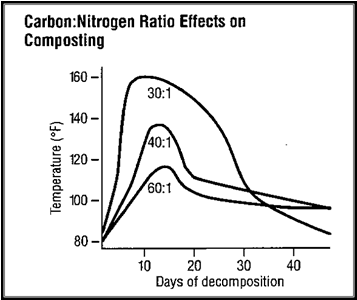
Organisms that decompose organic matter use carbon as a source of energy and nitrogen for building cell structure. They need more carbon than nitrogen. If there is too much carbon, decomposition slows when the nitrogen is used up and some organisms die. Other organisms form new cell material using their stored nitrogen. In the process more carbon is burned. Thus the amount of carbon is reduced while nitrogen is recycled. Decomposition takes longer, however, when the initial C:N ratio is much above 30.

In the soil, using organic matter with excess carbon can create problems. To complete the nitrogen cycle and continue decomposition, the microbial cells will draw any available soil nitrogen in the proper proportion to make use of available carbon. This is known as "robbing" the soil of nitrogen, and delays availability of nitrogen as a fertilizer for growing plants until some later season when it is no longer being used in the life-cycles of soil bacteria.
When the energy source, carbon, is less than that required for converting available nitrogen into protein, organisms make full use of the available carbon and get rid of the excess nitrogen as ammonia. This release of ammonia to the atmosphere produces a loss of nitrogen from the compost pile and should be kept to a minimum.
A C:N ratio of 20, where C and N are the available quantities, is the upper limit at which there is no danger of robbing the soil of nitrogen. If a considerable amount of carbon is in the form of lignin or other resistant materials, the actual C:N ratio could be larger than 20. The C:N ratio is a critical factor in composting to prevent both nitrogen robbing from the soil and conserving maximum nitrogen in the compost..
Since organisms use about 30 parts carbon for each part of nitrogen, an initial C:N (available quantity) ratio of 30 promotes rapid composting and would provide some nitrogen in an immediately available form in the finished compost. Researchers report optimum values from 20 to 31. A majority of investigators believe that for C:N ratios above 30 there will be little loss of nitrogen. University of California studies on materials with a initial C:N ratio varying from 20 to 78 and nitrogen contents varying from 0.52% to 1.74% indicate that initial C:N ratio of 30 to 35 was optimum. These reported optimum C:N ratios may include some carbon which was not available. Composting time increases with the C:N ratio above 30 to 40. If unavailable carbon is small, the C:N ratio can be reduced by bacteria to as low a value as 10. Fourteen to 20 are common values depending upon the original material from which the humus was formed. These studies showed that composting a material with a higher C:N ratio would not be harmful to the soil, however, because the remaining carbon is so slowly available that nitrogen robbery would not be significant.
CARBON NITROGEN (C:N) RATIOS IN FEEDSTOCKS
Plant residues are made up largely of the following:
1. sugar, starch, simple proteins (decompose rapidly)
2. crude protein (decompose slowly)
3. hemicellulose (decompose slowly)
4. cellulose (decompose slowly)
5. lignin, fat, wax, etc. (decompose slowly)
Rate of decay and release of nutrients to the soil vary greatly. Likewise, demands of living soil microorganisms vary as they "break down" plant residue. Sawdust (made primarily of lignin and cellulose) uses vast amounts of energy to maintain the lives of microorganisms digesting it. A major product of plant decay is nitrogen (N) while the undigested portion is primarily carbon (C).
The optimum ratio in soil organic matter is about 10 carbons to 1 nitrogen, or a C:N ratio of 10:1.
Following are some sample C:N ratios of organic matter:
Sandy loam (fine) 7:1
Humus 10:1
Food scraps 15:1
Alfalfa hay 18:1
Grass clippings 19:1
Rotted manure 20:1
Sandy loam (coarse) 25:1
Vegetable trimmings 25:1
Oak leaves 26:1
Leaves, varies from 35:1 to 85:1
Peat moss 58:1
Corn stalks 60:1
Straw 80:1
Pine needles 60:1 to 110:1
Farm manure 90:1
Alder sawdust 134:1
Sawdust weathered 3 years 142:1
Newspaper 170:1
Douglas fir bark 491:1
Sawdust weathered 2 months 625:1
Sunday, November 9, 2008
Iron Chlorosis Signals Problems [EXT]
http://www.ext.vt.edu/departments/envirohort/factsheets2/fertilizer/nov86pr1.html
Iron Chlorosis Signals Problems
Contact: Diane Relf, Extension Specialist, Environmental Horticulture Posted April 1997 Chlorosis means "becoming green." The term was first applied to a human condition in which the skin took on a greenish hue. Today it is more frequently used to describe plants whose normal color is green, but which have a condition which results in a lack of green color in some leaves. Chlorosis in plants results from nutrient deficiency, insufficient light, or certain virus diseases. The most frequent cause of chlorosis linked to nutrient deficiency is iron chlorosis. This develops when a plant is unable to absorb enough iron from the soil. Sometimes the soil does not contain enough iron; but most often iron is in the soil but in a chemical form which makes it unavailable to the plant. Soils with high pH (alkaline) often bind iron in a form plants cannot use. Most plants do not develop iron chlorosis in neutral (pH 7) or slightly acid soil, but begin to develop yellowing as soils become more and more alkaline (pH>7). Such plants include rose, iris, firethorn, spirea, apple and peach.
Some plants require very acid soil and develop iron chlorosis when they are grown in soils which are not acid enough. Such plants include azaleas, rhododendron, holly, hydrangea, blueberry and pin oak.
Iron chlorosis is different from other types of chlorosis; it affects young, new leaves first. Other forms of chlorosis often affect older foliage initially. Leaf color of plants with chlorosis ranges from yellow-green to almost white. Leaves showing iron chlorosis often retain green veins. In severe cases, leaf margins may be brown and die, and eventually entire plants may be killed. Even in mild cases where yellowing is slight, growth is reduced.
Iron chlorosis is usually associated with deficiency or unavailability of iron in the soil but it may also appear when roots are damaged by overwatering, poor drainage, or overfertilization. Any condition that kills roots or does not allow feeder root development can lead to iron chlorosis.Treat iron chlorosis by eliminating the cause. A soil test will determine soil pH. Alkaline soil, or soil which is not acid enough, may be treated with sulfur or iron sulfate to make it more acidic. Poorly drained soils should be improved and plants subject to iron chlorosis should be watered carefully. The color of plants several months after soil is amendmended will indicate need for future treatment.
To achieve temporary improvement in leaf color, there are materials available for providing iron quickly to plants. Iron chelates are organic compounds containing readily-absorbed iron. They can be placed in the soil for absorption by the roots or sprayed in dilute form directly on the leaves. Since the chemical concentration of the compound may vary with manufacturer, carefully follow directions given on the package.
When fertilizer is sprayed onto leaves the process is called foliar fertilization. It is a good way to supply some nutrients, including iron, to plants rapidly, but foliar feeding is not a substitute for good soil conditions. Foliar fertilizer can supplement soil nutrition at a critical time, but to eliminate iron chlorosis, correct the conditions causing it.
(Prepared by Virginia Nathan, Extension Technician, and Diane Relf, Extension Specialist, Environmental Horticulture, Virginia Tech, Blacksburg, VA 24061-0327.)
Saturday, November 8, 2008
The Myth of Phosphate Fertilizer (EXT)
This is useful resource to explain the impact of excess Phosphate in soil.
Linda Chalker-Scott, Ph.D., Extension Horticulturist and Associate Professor,
Puyallup Research and Extension Center, Washington State University
The Myth of Phosphate Fertilizer:
"Phosphate fertilizers will stimulate root growth of transplanted trees and shrubs"
This commonly spread myth originates from the legitimate addition of phosphorus to agricultural fields.
Phosphorus is one of the inorganic macronutrients needed by all plants for the manufacture of phosphatecontaining nucleic acids, ATP and membrane lipids. Soils that have been heavily used for agricultural crops are often deficient in phosphorus, as are acid sandy and granitic soils. In landscaped urban soils, however, phosphorus is rarely deficient and the misapplication of this element can have serious repercussions on the plant, the soil environment, and adjoining watersheds.
When an element is limiting in the soil, plant growth slows. This phenomenon is called environmental dormancy. When the deficient element is added, the environmental constraint is lifted and plant growth resumes at the normal rate if nothing else is limiting. Somehow the observation of growth restoration was interpreted as growth stimulation (i.e. a growth rate greater than normal) and hence fertilizers are often regarded as miraculous compounds (just look at the names of some of them!).
One of the classic symptoms of phosphorus deficiency is reddening of the leaves. Unfortunately, many environmental stresses also induce foliar reddening; examples include cold temperature, high light intensity, insect damage, and drought. Urban landscape plants are much more likely to experience one of these stresses than phosphate deficiency.
In contrast to phosphorus, nitrogen is much more likely to be limiting in urban landscapes. Nitrogen deficiency is characterized by overall leaf chlorosis. Among other things, the lack of nitrogen reduces the plant's ability to take up phosphorus. When nitrogen is restored to optimal levels, the plant's ability to scavenge phosphorus from the soil is markedly improved. It's important to realize that when nitrogen is deficient it does not logically follow that other nutrients must be deficient as well.
Because nitrogen is so often deficient in an actively growing landscape, the addition of ammonium nitrate usually restores shoot growth. Phosphate addition, on the other hand, often has no apparent effect (probably because it's generally not limiting in perennial landscapes. This observation has led landscapers and fertilizer manufacturers to claim that phosphorus stimulates root growth (there is no shoot growth, ergo it must be stimulating root growth). The unfortunate result of these assumptions is the mantra "nitrogen for shoots and phosphorus for roots." While there are no nitrogen toxicity symptoms per se, the same cannot be said for phosphate toxicity.
The result of phosphate overfertilizing is leaf chlorosis. Phosphorus is known to compete with iron and manganese uptake by roots, and deficiencies of these two metal micronutrients causes interveinal yellowing. It's my belief that many of the chlorotic shrubs we see in urban landscapes are suffering indirect iron (or manganese) deficiency from overapplication of phosphorus. Moreover, it has been experimentally demonstrated that high levels of phosphorus are detrimental to mycorrhizal health and lower the rate of mycorrhizal infection of root systems. This mutually beneficial relationship between the fungus and the plant roots allows the plant to more effectively explore the soil environment and extract needed nutrients. In the absence of mycorrhizae, the plant must expend more energy growing additional roots and root hairs to accomplish the same task.
In addition to harming beneficial soil organisms, excess phosphate will eventually find its way into waterways. Unlike urban landscapes, aquatic plants are most often limited by phosphate and the addition of phosphate will induce algal blooms (eutrophication). Such blooms are always followed by increased bacterial activity, resulting in lowered oxygen levels and the eventual death of fish and other animals. As green industry professionals, it is incumbent upon us to recognize that excessive use of phosphorus in landscapes is a resource-wasteful, ecosystem-damaging practice.
Bottom line:
• Maintain organic material (mulch) on landscapes; this provides a slow release of phosphorus and other needed macro- and micronutrients over time.
• Don't use phosphate fertilizer when transplanting; in most cases ammonium nitrate fertilizer is
adequate.
• If you have a nutrient deficiency that is not relieved by nitrogen addition, try a foliar application of likely nutrients and see if the symptoms are alleviated. This prevents excessive addition of mineral nutrients to the soil.
For more information, please visit Dr. Chalker-Scott’s web page at http://www.theinformedgardener.com.
Thursday, November 6, 2008
Terminology for Cranberry Bud Development and Growth (EXT)
http://www.hort.wisc.edu/cran/mgt_articles/articles_gen_info/TerminologyCranBudDev/cranbuddev.htm
I find this article interesting because it explains the different stages of bud development.
Beth Ann A. Workmaster, Jiwan P. Palta, and Teryl R. Roper
Department of HorticultureUniversity of Wisconsin-Madison College of Agriculture and Life Sciences, Madison, WI 53706
Cranberry researchers and growers typically use some sort of ad hoc terminology to refer to the growth stages of the bud in the springtime. This can be based on measurements of the changes in size of the bud and the subsequent growth, or on a description of their physical attributes, or morphology. It would be useful to standardize this terminology to aid in communication between and among researchers and growers. We have recently begun a research program at the University of Wisconsin-Madison to study cranberry frost survival. Our goal is to better advise growers about the freezing temperatures to which the plants will survive at different times of the year.
After taking close-up photographs of the buds of the uprights for several weeks in the spring of 1995 we established a visual continuum of spring bud development and growth. As expected, bud hardiness changed dramatically over the course of the spring, from being able to withstand temperatures colder than -4°F when dormant to surviving only temperatures just below freezing after the new uprights elongate. Thus, at different points along that bud developmental continuum significant changes in hardiness occur. In order to assess these changes more specifically we have been working on developing a useful set of terminology for these different bud stages.

3. Cabbagehead. Substantial swelling of the bud has occurred. Bud scales are opening, but still enclose the new growth. As the name implies, this stage is named for the bud’s ressemblance to a head of cabbage. Many buds have lost much or all of their red pigment. When viewed from the side, buds appear pointy and lengthened, in preparation for the emergence of the new growth.


Tuesday, November 4, 2008
Useful Tips (EXT)
http://plantanswers.tamu.edu/trees/rose.html
Rose
1. Q. As the weather gets hotter, my roses look worse. What can I do to insure that they survive the summer?
A. Poor cultural practices and neglect during summer months will weaken plants and make it harder for them to survive. Here are some suggestions on summer care of roses:
As flowers fade and petals fall remove old flowers. Otherwise, food and energy will go into seed production rather than plant growth and flower production.
When removing spent flowers cut just above the second five-leaflet leaf above the main cane or branch.
Use a complete fertilizer such as 10-10-5, 15-10-10 or similar formulations at the rate of 1 1/4 pounds per 100 square feet just as new growth starts in spring then apply about 1/3 to
Control blackspot and mildew by spraying with Benlate or Funginex every 7-10 days from the time new growth starts in the spring and continue throughout the growing season until frost.
So for optimum flower production this summer and fall give your roses that bit of added attention.
2. Q. I think my rose bushes need an overhaul - - they look terrible! Is there anyway to "supercharge" the bushes so they will bloom this fall?
A. The cooler temperatures of fall will stimulate rose bush growth and intensify the color of the rose blooms. Many people do not prepare their roses for this second spring so they miss really the most spectacular, longest lasting bloom period. Roses should be pruned and groomed from now until no later than September 20. Fall pruning is lighter than in the spring. Cut about one-fourth to one-third of the bush. When pruning miniatures, other than cleaning them out, simply cut off all the blooms. When pruning standard size roses remove all of the blooms and bloom pods. When removing the recommended one-fourth of the bush cut all canes back to pencil-size wood, remove any crossing canes which might rub and damage adjoining canes and remove any dead or diseased wood. The general shape of a rose bush should be open-centered or vase-like with canes evenly distributed around the outside. To prolong the bloom period you may want to prune only one-half of your rose bush at a time then wait a week to complete the process. The half which was pruned first will bloom first generally 45 days after pruning occurred. Mid-October should begin the peak rose bloom season. Remove and dispose of all diseased leaves with black spots on the foliage. Black spot fungus must be prevented rather than cured. Prevention is easily accomplished by a 7 - l0 day spray schedule with Funginex fungicide (Black Spot is a fungus disease) and Orthene insecticide for thrips (these cause blooms to stay closed or be mis-shapened). Spraying should continue until the first hard freeze occurs. By September, the spray interval should be shortened to every 7 days since disease is more prevalent. After fall pruning has been done, give the bushes a "shot in the arm" with the addition of fertilizer. Feeding with a water soluble fertilizer should occur every two weeks. Follow instructions by mixing one tablespoon of water soluble fertilizer per gallon of water and pour a gallon of solution around each plant. Don¹t feed with either liquid or dry fertilizers after October 15th so that growth can slow and harden for the winter cold. Water and wait for the beauty of fall - - that's all you have to do to "supercharge" your rose bushes.
3. Q. What are the best roses to grow?
A. Once you decide which rose type you want to plant (most folks will plant a hybrid tea or grandiflora), you will need to know which are the best varieties within those classifications. I not only have a listing of the best rose varieties for this area but also a POP (proof of the pudding) rating as compelled by the best rose growers in the state. Any POP rating above 8.0 is spectacular. Those rose varieties with POP above 7 are considered excellent. The best of the hybrid teas and grandifloras include:
First Prize - a pink-blend colored rose with a long pointed bud. It is a medium sized bush that is somewhat susceptible to black spot and mildew. It is, nevertheless, one of the top rated roses in the world with a POP of 9.1.
Color Magic - a pink blend rose with a "changing color" character with deeper colors of ivory to pink spreading and intensifying as petals are exposed to sunlight. The POP of Color Magic is 8.0.
Fragrant Cloud - This variety produces an orange-red bloom on a medium size bush. The bloom is extremely fragrant and Fragrant Cloud rates a POP of 8.1.
Uncle Joe (Toro)- The best of the red roses with a POP of 7.9.
Bewitched- A medium pink rose that grows on a medium sized bush. It merits a POP of 7.2.
Double Delight - A stunning rose which has a cream colored bloom with red edges. It is one of the most favored of all rose varieties and has a POP rating of 9.0.
Candlelight - A deep yellow bloom which is tinged with pink especially in the fall. Blooms are produced on a tall, vigorous plant. No POP available.
Christian Dior - A medium red bloom with an ovoid pointed bud. It has a large flower and an abundance of blooms. The POP rating is 7.1. The edges of the petals burn in hot dry settings, so it is advisable to plant where it will receive some afternoon shade.
Queen Elizabeth - This is the most popular rose of the Grandiflora class. It has a medium pink bloom, produces an abundance of blooms and rates a POP of 9.1.
White Masterpiece - Very large (up to 8 inches across), double centered white flower. It's POP is only 7.3 because of double-centered, non-displayable blooms.
Montezuma - A double, deep coral-pink colored bloom with 32-40 petals. Montezuma comes very close to the grandiflora ideal with a POP of 7.1.
Touch of Class - It is a pink blend which normally has super form. When it has been in commerce long enough to have a rating it should certainly be a POP of over 9.0.
In the floribunda category the winners are Fire King, an orange red with a POP of 7.5;
Miniatures have become very popular in the last few years. As a result hundreds of new cultivars have bee introduced with different results.
4. Q: When do you prune roses? Climbing roses?
A: Hybrid tea, Grandiflora and Floribunda roses require annual pruning in the spring just prior to bud break. If rose bushes are pruned too early, injury from late frost may make a second pruning necessary. Climbing roses should be pruned in the fall, any time after cold weather sets in. Old rambler roses should be pruned immediately after flowering.
5. Q: Leaves are eaten off my rose bush. Sometimes the whole leaf blade is gone, and other times, the leaf is half eaten. What type of insect is eating my plants?
A: Probably some type of chewing insect. Examine plants frequently to see if any pests can be found. Treatment depends on insect. Leaf cutting bees or ants are a common problem.
6. Q: Should I or could I pour pickle juice around roses?
A: Pickle juice would be acid, so it would lower the pH somewhat, but sulfur would be a better choice. You would need to know the actual pH before you did anything.
7. Q: When and how do you start rose cuttings?
A: Roses can be started from terminal cuttings or leaf bud cuttings. However, because all hybrid roses are grafted onto a common root stock you should buy the variety you want that is already grafted.
8. Q: Does the petal count of roses determine the number of days before subsequent blooms occur?
A: Yes, on hybrid teas. According to the Rose Society if a flower has forty petal blooms when cut, then it will take 40 days to rebloom. However, this is a broad rule of thumb.
9. Q: Can fish oil be used to feed roses?
A: No, not strong enough. Suggest 12-12-12 or 10-20-10.
10. Q: Do you need organic material, iron and nitrogen fertilizer for roses?
A: Needs organic material; iron is not a usual problem in most rose beds; suggest 12-12-12 or 10-20-10 fertilizer rather than straight nitrogen.
11. Q. I have heard about the great attributes of old-fashioned or antique roses. What do you know about them?
A. Though these plants do have some redeeming features, they are not what most people want in a garden rose. Many consider Belinda's Rose (Belinda's Dream) to be the best (most desirable qualities of disease resistant, fragrance, durability, flower form) rose in the world.
12. Q. I think my rose bushes need an overhaul - - they look terrible! Is there anyway to "supercharge" the bushes so they will bloom this fall?
A. The cooler temperatures of fall will stimulate rose bush growth and intensify the color of the rose blooms. Many people do not prepare their roses for this second spring so they miss really the most spectacular, longest lasting bloom period. Roses should be pruned and groomed from now until no later than September 20. Fall pruning is lighter than in the spring. Cut about one-fourth to one-third of the bush. When pruning miniatures, other than cleaning them out, simply cut off all the blooms. When pruning standard size roses remove all of the blooms and bloom pods. When removing the recommended one-fourth of the bush cut all canes back to pencil-size wood, remove any crossing canes which might rub and damage adjoining canes and remove any dead or diseased wood. The general shape of a rose bush should be open-centered or vase-like with canes evenly distributed around the outside. To prolong the bloom period you may want to prune only one-half of your rose bush at a time then wait a week to complete the process. The half which was pruned first will bloom first generally 45 days after pruning occurred. Mid-October should begin the peak rose bloom season. Remove and dispose of all diseased leaves with black spots on the foliage. Black spot fungus must be prevented rather than cured. Prevention is easily accomplished by a 7-10 day spray schedule with Funginex fungicide (Black Spot is a fungus disease) and Orthene insecticide for thrips (these cause blooms to stay closed or be mis-shapened). Spraying should continue until the first hard freeze occurs. By September, the spray interval should be shortened to every 7 days since disease is more prevalent. After fall pruning has been done, give the bushes a "shot in the arm" with the addition of fertilizer. Feeding with a water soluble fertilizer should occur every two weeks. Follow instructions by mixing one tablespoon of water soluble fertilizer per gallon of water and pour a gallon of solution around each plant Don't feed with either liquid or dry fertilizers after October 15th so that growth can slow and harden for the winter cold. Water and wait for the beauty of fall - - that's all you have to do to "supercharge" your rose bushes.
13. Q. I have weird looking leaves on the growing tips of my rose bushes. The affected leaves have a whitish-grayish, dust- like substance on them. What is causing this problem and how can I solve it?
A. You have a BIG problem but a common one. Pest control is one of the major problems facing area rose growers. Insects such as thrips damage flower buds and cause them not to open or to form odd-shaped blooms. These insects must be prevented rather than waiting until damage occurs before acting. Once damaged, blooms are not salvageable. The same is true for foliage diseases--prevention rather than cure should be the rule. The most notorious of the rose foliage diseases are black spot and powdery mildew, which can severely damage most of leaves and impair the plant's ability to produce a bounty of large, beautiful blooms. The black spot fungus disease is prevented by applying triforine (Ortho Funginex) or benomyl (Greenlight Systemic Fungicide) spray every 7-10 days. Powdery mildew, the affliction which you describe as affecting your roses, is best controlled with bayleton (Greenlight Fung-Away) or benomyl (Greenlight Systemic Fungicide). Apply Orthene, diazinon or malathion for insect control when necessary. Do not apply a mixture of Orthene and Funginex more than two weeks in a row. Applying insecticides and fungicides separately is safer for plant health. Also, using insecticide on the buds only, rather than the entire bush, gets super results for insect control. These pesticide sprays are a necessity if rose growers expect an abundance of perfect blooms on disease-free plants.
14. Q. My 22 hybrid tea roses and five climbing roses have been damaged by a late freeze. The new green growth, leaves about three inches, have turned brown and some of the canes on the hybrid teas are black and soft. In 12 years of growing rosese I have not experienced any damage this severe. Should I remove the brown leaves and blackened canes now or wait until warmer weather? Should I fertilize to encourage new growth now or wait until new growth appears on it's on, hopefully they are not dead. What setbacks am I to expect?
A: Wait until the plants recover and begin a new flush of growth -- then cut all dead wood above the flushing area. If you want to do something now, it is a safe bet to remove blackened, withered wood. However, some buds may be damaged, even on green wood, to a point they will not initiate foliage. BEWARE that you don't forget most roses are grafted so if sprouts and shoots arise only from beneath the graft union, you have lost the rose. I would wait on fertilization until after the sprouting has begun then feed as you would normally.
15. Q. I have a Fragrant Cloud rose that has white spots covering the older canes, and it has spread to some of the leaves. The smaller canes have turned brown and died back. The spots are not moving (not bugs). Any clues?
A: You are dealing with "critters" on your Fragrant Cloud (GOOD CHOICE!!) rose called scale. They are aphid-like covered with a white sheild. When you prune next February, try to remove all affected branches. If you just have one bush, you can rub all you see off with your hand. You can direct spray them with an insecticide such as Orthene or direct spray with a summer oil spray. BE SURE to be careful and FOLLOW label instructions with the summer oil spray or you can damage your plant to the point of death. Roses are having a hard time with these hot temperatures but summer prune them in September for beautiful fall bloom in cool temperatures.
16. Q: Could you please enlighten me on the history of the yellow rose of texas?
A: The "Yellow Rose of Texas" according to the history was NOT a flower but a lady-of-the-night who kept Santa Anna "occupied" to delay battle so that reinforcements could arise. Ironically, the yellow rose is the weakest of all rose colors -- horticulturists and rose breeders are constantly trying to find a good, yellow rose. In Dr. William Welch's book, Antique Roses For the South, he indicates that "Pioneers moving westward often took 'Harrison's Yellow' with them, and it persists in old California gardens today, testifying to the transcontinental trek to new frontiers. Some historians consider 'Harrison's Yellow' to be the "Yellow Rose of Texas".